
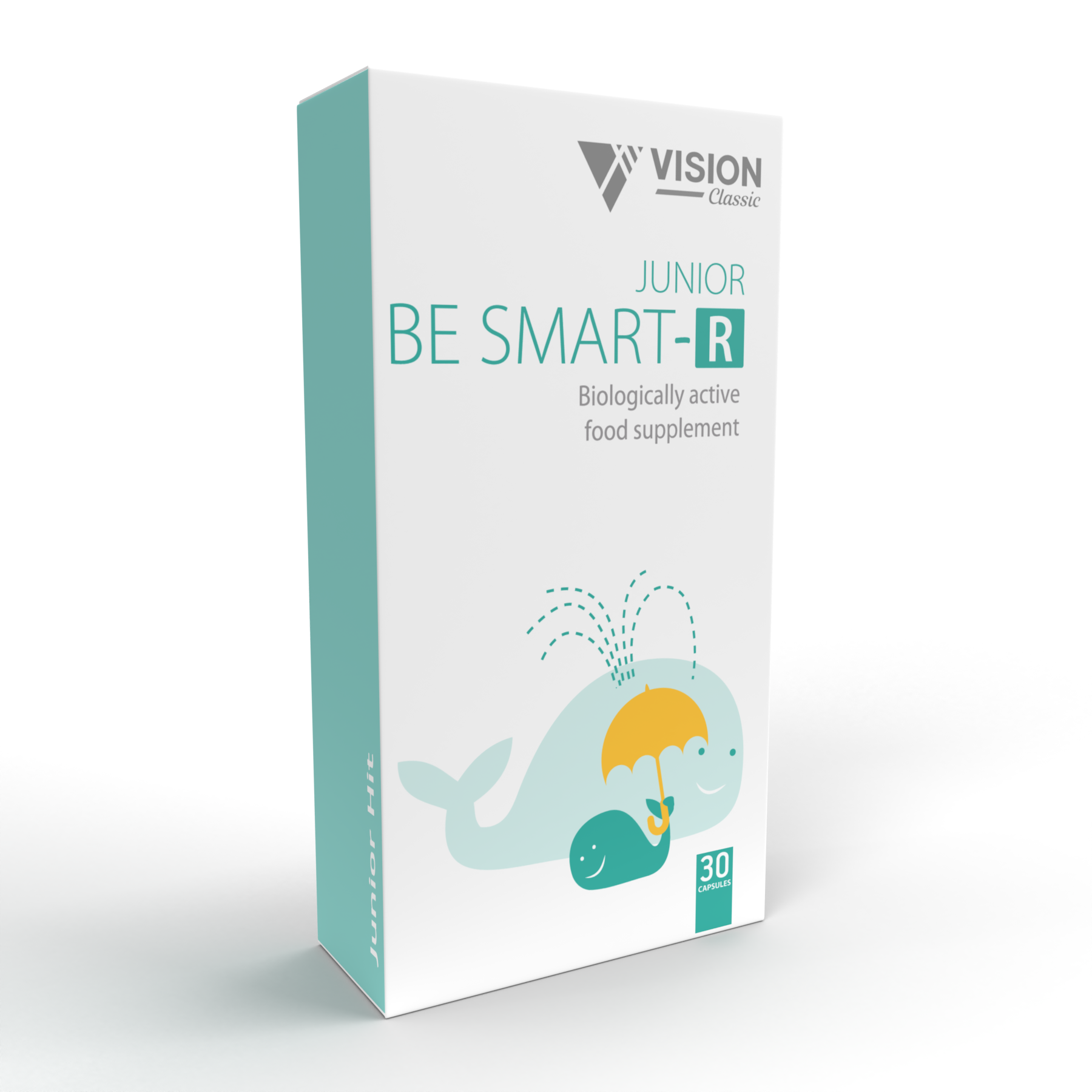
The Junior Be Smart complex contains polyunsaturated omega-3 fatty acids that stimulate intellectual development.
Omega-3 intake is associated with normal cognitive development according to nutritional research. Omega-3 fatty acids support normal vision and cognitive function.
Enjoying the pleasant taste, the child gets fat-soluble vitamins A and D , necessary for his development.
- Provides omega-3 fatty acids that support normal brain development.
- Good memory, concentration and attention
Citrus fruits are especially important for children during the winter.
For example, oranges, in addition to a large amount of vitamin C, contain the bioflavonoid inositol, which has a beneficial effect on the state of the child’s nervous system, improves bowel function. Freshly squeezed citrus juices are recommended, but they should be drunk within 10-15 minutes. Because vitamin C is destroyed quickly.
Many parents make mistakes when they actively connect the development of their child’s brain with school age. This process begins much earlier, when the child begins to get to know the world. If we imagine, cognitive development is a continuous process that begins immediately after birth and requires enormous mental and energy strength from the child. Every second, the child gets some new information, compares it with what is already known, analyzes it, remembers it and transforms it into knowledge and experience.
For the normal functioning of the brain, increase of thinking abilities, as well as for storing information in the memory, the child’s body needs polyunsaturated omega-3 fatty acids. It has been proven that in children whose diet is enriched with polyunsaturated omega-3 fatty acids, cognitive thinking is more developed, the brain and retina of the eye function better, and the IQ is higher than in children who are deficient in these vital acids.
Why are omega-3 acids so important for children?
We will try to answer this question, starting from the first years of child development. As essential elements of the diet, polyunsaturated omega-3 fatty acids begin to actively participate in the formation of brain cells before the birth of a child and continue their work later. Then the brain needs building material for cells and for the formation of new connections between them. According to scientists, the best food for children’s brains are polyunsaturated omega-3 fatty acids.
Once in the body, omega-3s are deposited in the membranes of the brain and reproductive system. In this way, they contribute to the formation and development of brain tissue, that is, they stimulate the mental development of a child at an early age.
But one should not think that only children need omega-3 fatty acids. Learning at school requires maximum concentration from the child and the ability to quickly adopt new material. Polyunsaturated omega-3 fatty acids help children think faster and have a better memory. That’s why schoolchildren need omega-3 fatty acids.
Recently, attention deficit hyperactivity disorder and hyperactivity disorder are common causes of behavioral disorders and learning difficulties in preschool and school age. A hyperactive child cannot sit in one place, is not able to concentrate and has difficulty controlling his actions. As a result, in addition to behavioral problems, there is an inability to succeed. Formulated to support well-being as part of a balanced diet.
In addition to brain activity, the colossal load in preschool and school age is also felt in children. Sitting at a desk above a notebook or in front of a computer, the child learns to read, draw and write, and does homework. From all this, the eyes strain and get tired.
Vitamin A contributes to the maintenance of normal vision. With vitamin D, it actively influences the processes of bone growth and the formation of tooth enamel, since vitamin D provides normal and complete absorption of calcium in the intestines.
Omega-3 fatty acids are structural components of cell membranes, including those of immune cells.
You can easily see how useful the omega-3 acids that are part of the Junior Be Smart product are.
Ingredients: ocean fish oil, capsules (thickener – glycerol, gelatin, starch, water, natural orange flavor), natural flavor “orange oil”, DL-α-tocopherol acetate, antioxidants – tocopherol-rich extract, ascorbyl palmitate, retinyl palmitate, cholecalciferol.
Quantity: 30 chewable capsules
Net weight: 21 g
| ACTIVE INGREDIENTS: | 1 capsule (700 mg) | 2 capsules (1400 mg) |
| EPA | 90 mg* | 180 mg* |
| DHA | 60 mg* | 120 mg* |
| Vitamin A (RE) | 400 µg RE** (50%***) | 800 µg RE** (100%***) |
| Vitamin D | 2,5 µg (50%***) | 5 µg (100%***) |
| Vitamin E (α-TE) | 1 mg α-TE | 2 mg α-TE**** (16,7%***) |
* NRV – nutritional reference value has not been established
** RE – all trans retinol equivalent
*** NRV – nutritional reference value
**** α-TE = α-tocopherol equivalents
Food supplement. Not a medicine.
Does not replace a varied and balanced diet and healthy lifestyle.
Results may vary; consult your doctor if you have a medical condition or use medication.
Reviews
There are no reviews yet.